
- So, digital health applications are regulated?
- What guarantees do digital health apps that comply with regulations provide?
- How can I know if a digital rehabilitation solution complies with the legislation?
- I have a bracelet that tells me the pulses and the steps with an application. What happens in these cases?
- What if the digital platform I buy does not have CE marking?
Today it is an undeniable fact that the health and health technology sector are accompanying society on its way to global digitalization, an exponential trend of digital solutions that are developing in recent years being evident. In fact, you only need to observe the U.S market data and predictions in the Systems and digital health products, especially those related to applications for mobile devices or tablets.
Among these are digital platforms or mobile applications used by professionals and/or patients for medical or therapeutic purposes, as it would be in the area of rehabilitation.
Given this phenomenon and taking into account the high impact that these solutions can have on the health and well-being of people, the social responsibility of manufacturers, health authorities and also of the medical centers that use the products is of crucial importance. All parties involved must ensure and promote that all Digital tools or solutions comply with the regulatory provisions that apply to them.
Complying with the regulations not only guarantees being able to legally market and use a product, in this case sanitary, but above all the product is safe, effective and works according to its intended use.
So, digital health applications are regulated?
The answer is yes. These types of digital solutions will be within what is considered as medical devices, and as such they have to follow European legislation (EU Regulation 2017/745 of the Parliament and of the Council) and National (Royal Decree 1591/2009 by which health products are regulated) to guarantee their safety and their legality in their use. In fact, the Regulation defines the medical product, among several other aspects, such as all device (specifying the inclusion of software) for the purposes of diagnosis, prevention, monitoring, prediction, compensation, treatment or relief of a disease or a injury or disability.
Therefore, a digital solution or application (device, computer program) aimed at monitoring or providing tools for a rehabilitation process, that is, it has the purpose of monitoring or treating a disease, injury or disability, is by definition a medical device.
What guarantees do digital health apps that comply with regulations provide?
Starting from the premise that we are talking about the use of medical devices that do not comply with regulations can have criminal consequences not only for those who put the product on the market, but also for the centers or professionals who use them.
Complying with these regulations and certifications ensures and maximizes the safety of the healthcare product over the patient and the user who uses it in various aspects. This implies having passed a process of verification and validation of the product, as well as a clinical evaluation in which data has been collected on its safe use and on the measures that the tool has in the face of any risk that exists in its use. It is evidence that the health product has been shown to function as indicated and that it entails a certain contribution to the well-being of patients who use it.
That is why it is important that when purchasing or using a medical application, we make sure that it complies with applicable legislation.
How can I know if a digital rehabilitation solution complies with the legislation?
By law, the first person responsible for ensuring that your healthcare product complies with applicable regulations is the manufacturer itself. For this and after an evaluation process, it will place the “CE marking” (Conformité Européene) in your product. This information can usually be found in the “About, Product Information, Help…” section of the digital solution or application, where it must also be associated with the data of the solution manufacturer.
.png?width=431&name=Marcado%20CE%20ReHub%20(850%C2%A0%C3%97%C2%A0500%C2%A0px).png)
CE marking on the ReHub platform.
“Help” section within “About me”.
Apart from this, make sure that the manufacturer is registered in the European database EudaMed and that, if it is Spanish, it has a previous operating license provided by the Spanish Agency for Medicines and Health Products (AEMPS). It is important to know how to contrast all this data, since a phrase from “we comply with the CE marking” is not evidence of its fulfillment.
I have a bracelet that tells me the pulses and the steps with an application. What happens in these cases?
These products are considered Wellness or fit That, although many can measure steps, burned calories, heart rate, stress level and track progress, are not intended for any of the medical purposes we have described above.
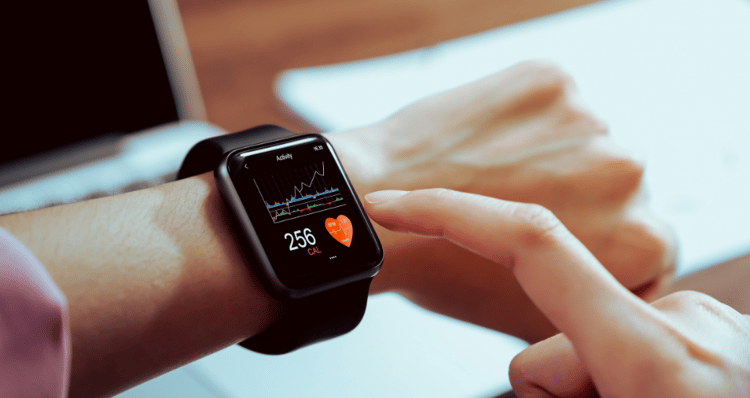
This means that the manufacturer is exempt from any guarantee or responsibility for health that may be a consequence of the use or interpretation of these devices and applications, because there is no evidence that they are suitable for effective medical use or that they are safe, or may lead us to interpret incorrect information. which could indirectly cause health problems.
For these reasons, the use of an application of these for medical purposes (such as any type of rehabilitation) on a patient, is a legal breach.
What if the digital platform I buy does not have CE marking?
Current legislation considers a series of Violations and sanctions related not only to the market, but also to the use of medical devices that do not comply with their applicable regulations. Healthcare professionals must ensure that medical applications are used in accordance with the regulations or that they are used according to the intended purpose indicated by the manufacturer. For example, an appropriate app for Wellness and/or Fitness cannot be used for rehabilitation.
The European Commission appoints the Member States to the management of the multas. In Spain, sanctions are regulated at the state level by Law 14/1986 General of Health, by Law 29/2006. In other words, if you acquire a digital solution for medical purposes and it does not have accreditation of compliance with its community and state regulations (declaration of conformity, AEMPS license…), Fines and sanctions will not only be for the manufacturer of the solution, but also They could also be for the health professional who uses that product.
For this reason, it is very important that as a buyer of a health technology, it is taken into account if the supplier has the CE marking of a medical device.