
Key Points:
- Telerehabilitation via ReHub can be used in speech therapy treatments
- Treatment of dysphagia in post-stroke patients shows high adherence and satisfaction
- Remote treatment facilitates accessibility of patients from rural areas
- Speech therapy also benefits from telerehabilitation
Introduction:
Post-ictus dysphagia represents a significant challenge in rehabilitation, especially in rural areas with few professional speech therapists available. In Mutuam Girona, a speech therapist used ReHub for the treatment of these patients. The adherence and satisfaction of this innovative solution that improves accessibility to treatment of many patients has been evaluated.
METHODS:
A quasi-experimental prospective study was conducted with 7 post-stroke patients with dysphagia from an intensive rehabilitation unit. The patients received a hybrid treatment that included face-to-face and digital sessions using ReHub. The effectiveness of the treatment was evaluated using the EAT-10 and the MECV-V test before and after treatment.
Showing:
A high adherence of 6 of the 7 patients to ReHub therapy was observed, with an average of 61 exercises, 12 sessions and 95 minutes of exercise carried out by each patient through the platform. The application satisfaction was high, with an average score of 4.4 out of 5. In addition, a significant improvement in the efficacy and safety of the swallowing of solid and liquid foods was evidenced, allowing patients to progress in oral feeding.
“I started with the ReHub platform to continue with the rehabilitation of dysphagia once the patients are discharged from our hospital. In this way, patients can carry out rehabilitation telematically at their home, while we communicate with them through the application. Anyway, one day a week They attend the hospital to do face-to-face session, and thus: continue with the rehabilitation, reassess swallowing, solve doubts … With this face-to-face session we promote adherence to TV -Rehabilitation. Undoubtedly ReHub is an alternative for those patients with dysphagia who live in areas that there are no speech therapists or waiting to start outpatient rehabilitation in their area. “- Neus Marti Bruñol, speech therapist.
Conclusions:
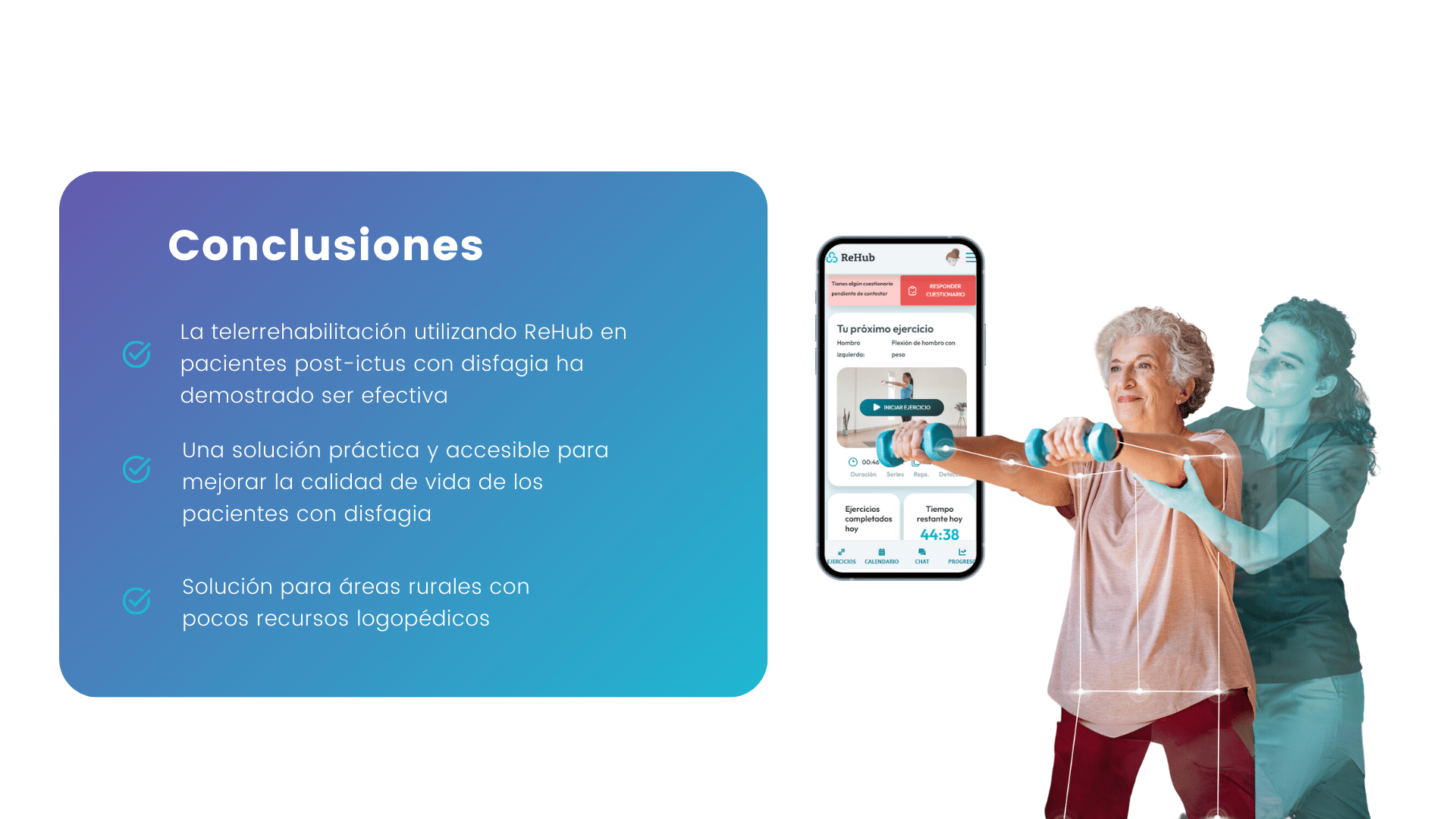
Telerehabilitation using ReHub in post-ictus patients with dysphagia has been shown to be effective, with high adherence and patient satisfaction. This innovative approach offers a practical and accessible solution to improve the quality of life of patients with dysphagia, especially in rural areas with little availability of speech therapy resources.
Authors: Martí Bruñol, Neus; Gonzalez Hoelling, Samira; Fernandez Rosso, Ines.