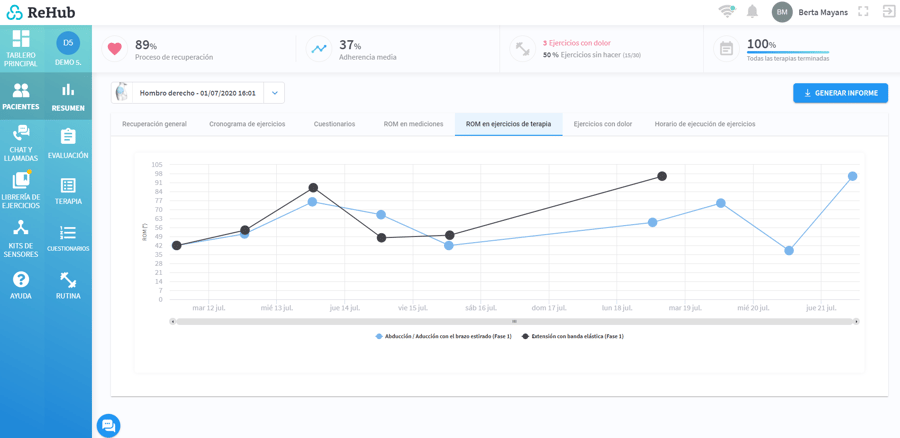
Rom Therapy Exercise
A new graph has been created in the Patient Summary, showing the evolution of the patient’s range of motion during therapy. This way you can see if the range of motion increases or decreases with therapy. This can only be seen with patients who perform the exercises with a sensor or with a camera, since there is motion detection.
DASS 21 QUESTIONNAIRE
Now, the Physiotherapy professionals have the DASS-21 questionnaire available, which helps assess the presence and intensity of affective states of depression, anxiety and stress. Each item is answered according to the presence and intensity of each symptom in the last week on a Likert-type response scale from 0 to 3 points. Each scale has seven items and its total score is calculated with the sum of the items belonging to that scale and varies between 0 and 21 points.
The depression scale evaluates dysphoria, lack of meaning, self-depreciation, lack of interest and anhedonia. The anxiety scale considers subjective and somatic symptoms of fear, autonomic activation, situational anxiety, and subjective experience of anxious affection. The stress scale evaluates non-specific persistent activation, difficulty relaxing, irritability and impatience.
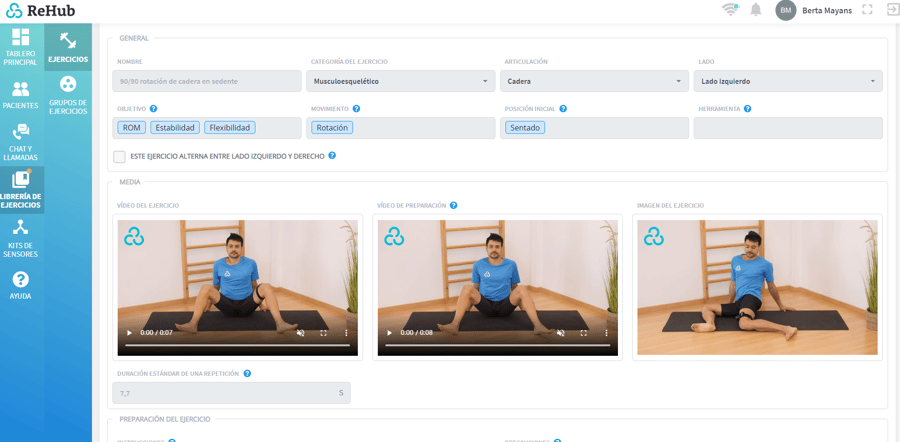
Configurable video duration
Added a new field called ‘Standard Repetition Duration’ in ReHub Exercises. In this field you can put the standard duration of a repetition of the exercise so that when you add an exercise or a group of exercises, the professional can add a value as seconds per repetition of that exercise in patient therapy.