
In the age of technology, telerehabilitation has become increasingly popular as an effective form of treatment for a wide range of musculoskeletal conditions, including low back pain. Telerehabilitation allows patients to receive treatment from the comfort of their home, using technologies such as videoconferences and mobile applications.
What is low back pain?
Low back pain is a medical term that refers to pain in the lumbar region, that is, the lower back. Low back pain is one of the most common musculoskeletal conditions, affecting people of all ages and lifestyles. The cause of low back pain can be diverse, from poor posture to traumatic injuries.
It is estimated that around the 80% of the population will experience low back pain at some point in their lives. the problem.
While most cases of low back pain are resolved with conservative treatment, such as physiotherapy, there are situations where surgery is required.
Causes of low back pain
Low back pain is a very common condition that can have various causes. Some of the most common causes of low back pain include:
- Bad postures: Bad postures when sitting, standing or lifting objects can exert excessive tension on the muscles of the back and spine, which can lead to low back pain.
- Traumatic injuries: Traumatic injuries, such as sprains, muscle strains, or fractures, can damage the tissues of the back and spine, which can cause low back pain.
- Disc herniation: Disc herniation is a condition in which the gelatinous material found inside an intervertebral disc comes out and presses on a nerve. This can cause low back pain, in addition to leg pain and other symptoms.
- Degenerative problems: Degenerative problems, such as osteoarthritis or spinal stenosis, can cause low back pain as the wear and tear of the back and spine tissues occurs.
- Postural and mobility problems: Postural and mobility dysfunctions such as scoliosis, kyphosis, or lordosis can cause low back pain.
- RISK FACTORS: Some risk factors, such as overweight, smoking, and lack of physical activity, can increase the likelihood of developing low back pain.
It is important to consult a health professional if you experience low back pain to determine the specific cause and receive the right treatment.
Benefits of telerehabilitation for low back pain
Telerehabilitation for low back pain can include a series of specific exercises to strengthen the back muscles and improve the flexibility of the spine. blood circulation.
In addition, telerehabilitation for low back pain can include advice on ergonomics and changes in lifestyle that can reduce back burden and prevent future injuries.
The benefits of telerehabilitation for low back pain include:
- Higher accessibility: Telerehabilitation allows patients to receive treatment from the comfort of their home, which can be especially beneficial for those who have difficulty commuting or who live in rural or remote areas.
- Higher comfort: Telerehabilitation offers greater comfort for patients, since it allows them to receive treatment in a familiar and comfortable environment, which can improve their well-being and increase their motivation to participate in the treatment.
In short, telerehabilitation is an effective and convenient option for the treatment of low back pain, offering a wide range of benefits for patients. If you suffer from low back pain, don’t hesitate to consult a health professional to explore treatment options, including telerehabilitation.
ReHub and low back pain
Low back pain enters the top 3 of the pathologies most treated with ReHub by specialists who already use our telerehabilitation platform.
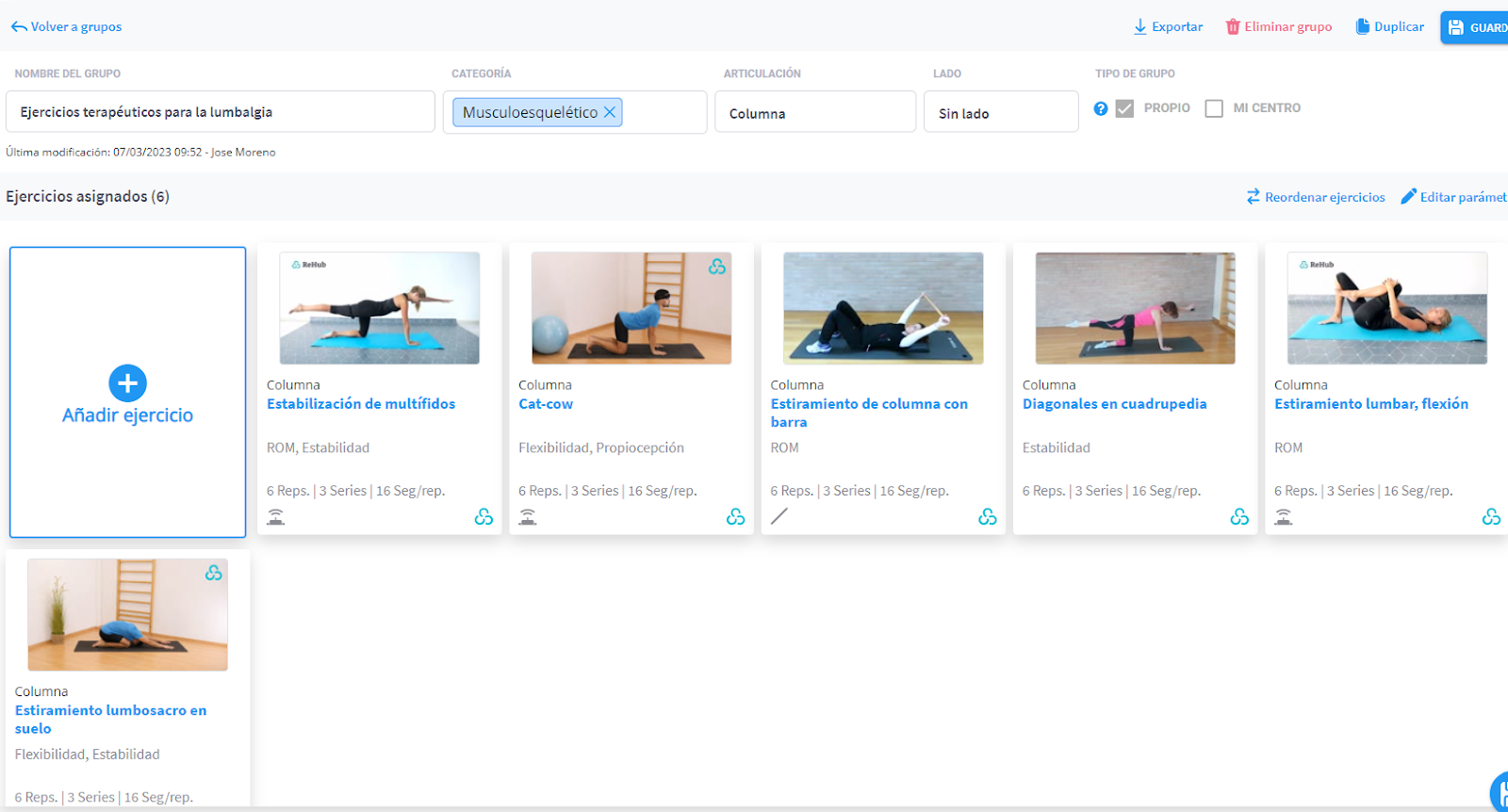
Through the platform, the professional can guide the patient to carry out a rehabilitation in a digitized and constantly monitored way. The great variety of specific exercises to work precisely and objectively The different aspects facilitate having a comprehensive rehabilitation. Among them the development of the strength of the center of the body or core (core), with exercises endorsed by a physiotherapist and created so that all types of population can carry it out depending on their limitation.
The exercises most used by physiotherapy professionals using the ReHub platform are:
- Multifid stabilization
- Cat-cow
- Column Stretch with Bar
- Quadruped diagonals
- Lumbar stretching, flexion
- Lumbosacral stretch on the ground
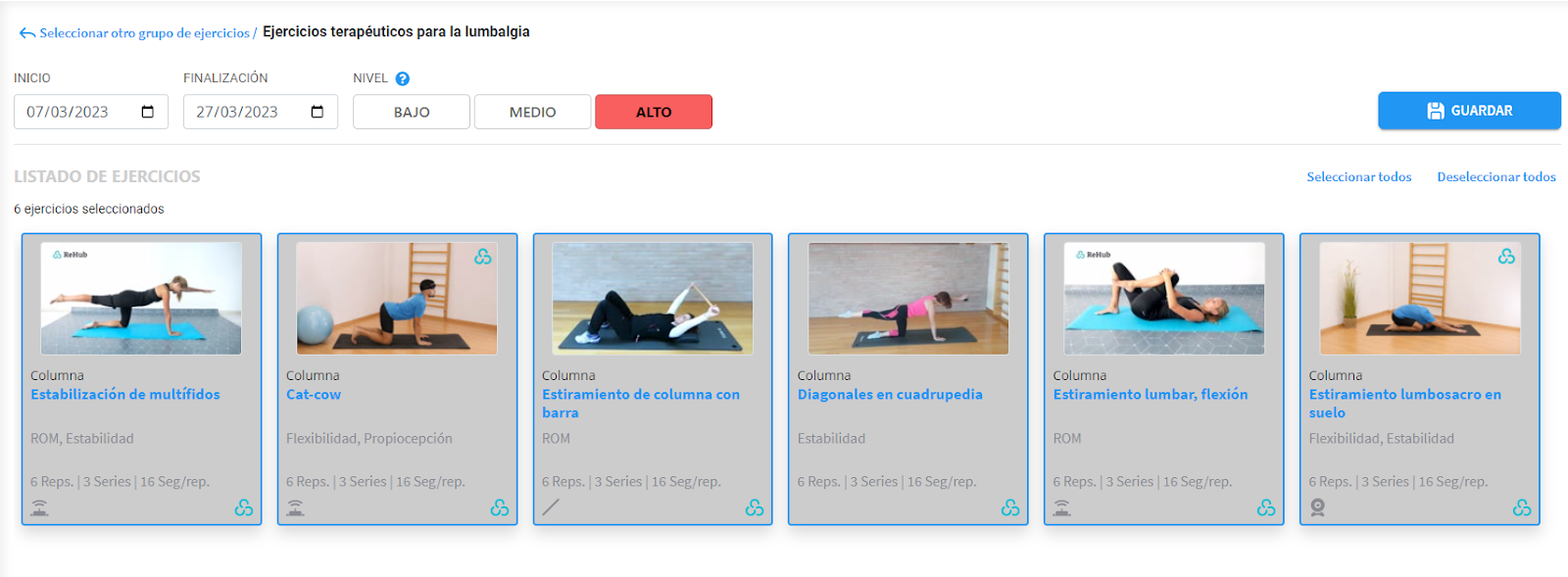
With these exercises, the aim is to reinforce the abdominal girdle of the person and release the tensions of the lumbar area, with postural hygiene exercises, muscle strengthening of the core and specific stretching to release the adhesions of the contractured tissues; In addition to stabilize the lumbopelvic area, to keep the body in a muscle balance between the upper body and the lower body and have an increase in muscle strengthening of the stabilizer and antigravity muscles
These exercises They allow us to approach the patient in a preventive way to avoid future recurrences and that the central area of the body is stable and strengthened
Telerehabilitation for low back pain can include stretching, strengthening and mobilization exercises, and education on the correct posture and ergonomics in the workplace. It can also include virtual therapy and counseling on pain management. Patients can benefit from the convenience and convenience of receiving online care. In short, telerehabilitation is a promising way to treat low back pain and other musculoskeletal disorders, and its use is expected to continue to grow in the future.
Schedule a demo now And know first-hand how ReHub can help you in your clinical practice.