
After almost two years of pandemic, there are few who question that lA digital transformation of the health sector is here to stay. The urgent need to offer non-face-to-face services and the urgency to improve management at a time of saturation of the health system have been the definitive catalysts for a paradigm shift announced years ago.
Below are some of the Trends in digital health that will be protagonists during this year 2022 that we just started:
1. Digital monitoring: Own health data
Wearables, devices capable of measuring biometric and health dataThey are getting smaller, more accurate and smarter. and the very fast technological advance, both in the development of these devices and in their software, allows anyone today to collect useful daily information to monitor their health status.
According to the report “Predictions TMT 2022Deloitte’s 2022 will reach 330 million portable health devices, a spectacular figure that will almost reach 500 million in 2024.
Although it is evident that this “explosion” in obtaining health data must be taken with caution (Its value as a medical diagnosis must always be validated by health professionals), it is also true that thanks to the calculation power and analysis of the software The precision is increasing, and therefore Its usefulness must be seriously considered by the health authorities, so that they can be correctly integrated into the health databases of each patient, thus helping to monitor and monitor in real time, especially of chronic patients.
For example, Lynx Use inertial sensors To make it easier for physiotherapists and rehabilitative physicians to Functional evaluation of patients with musculoskeletal problems.
2. Big Data Doctor: The challenge of privacy and security
One of the consequences of the digitization of health is the exponential increase in the volume of medical data. And in parallel to the enormous possibilities that open up for the present and future of medicine, one of the most urgent challenges is that of Ensure the privacy and security of personal data.
Beyond economic interests, the competent authorities must work so that Open access and interoperability of medical data (essential for scientific advancement), Do not compromise the right to privacy.

Steps are already being taken in Europe in this regard, and one of the European Commission’s objectives for the period 2019-2025 is the Creation of a European Health Data Area that facilitates the exchange by ensuring compliance with the GDPR in all member countries.
At the same time, the increase of cyber attacks that affect health systems Increases the need for health infrastructures (devices and software) to strengthen their security protocols to prevent Sensitive data leak.
3. Cloud Computing and Artificial Intelligence: Present and future potential
The real value and potential of the large amount of medical data available depends on its correct management and analysis, and that is where technologies such as artificial intelligence or Cloud Computing.
The capacity of artificial intelligence is very broad in the field of health, and goes from the Faster development of new drugs thanks to better simulations More accurate and useful understanding of medical data, facilitating the making of more effective medical decisions and treatments.
The Cloud Computing Facilitates access and exchange of medical data in real time. Using supercomputers, you can’t accelerate data analysis and processing to any research equipment, avoiding the need to invest in expensive computer equipment.
4. Telemedicine: Beyond telematic attention
Telemedicine has taken great strides in the last months of the pandemic, by avoiding the risks of face-to-face and allowing you to continue offering medical attention at a distance. And the truth is that there are many who have become accustomed to the comfort of being able to resolve doubts and be attended from home, which has increased the Trust and satisfaction with telemedicine.
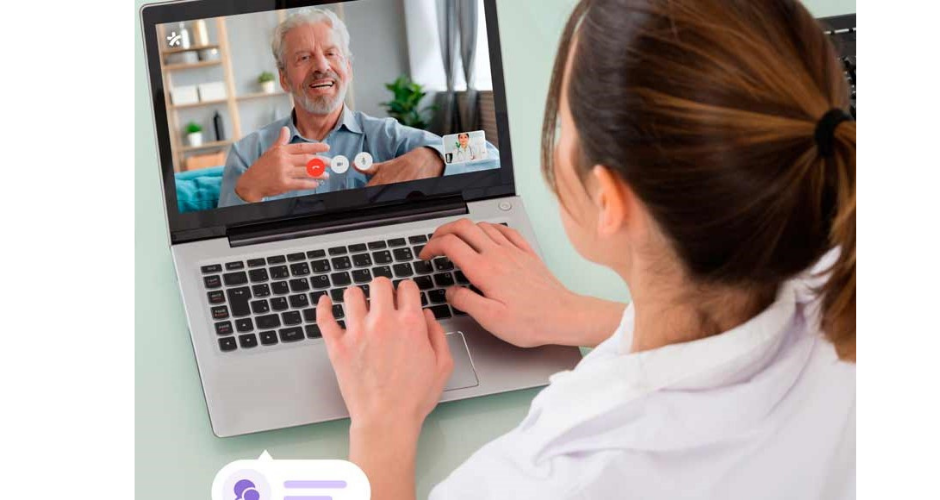
But beyond video calls or chats between patients and medical professionals, telemedicine should incorporate professional patient monitoring software and, above all, a control of the entire process to become a true alternative to face-to-face practice.
During the pandemic, rehabilitation professionals have benefited from these new care models. For example, with Telerehabilitation Professionals can design therapeutic exercises and follow the evolution of patients remotely. In this way, they can include more patients in their rehabilitation service.
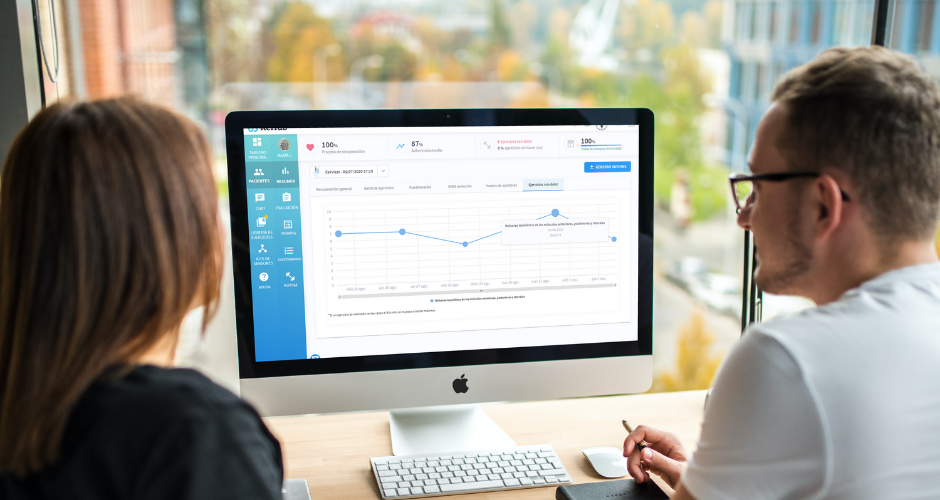
Other professionals combin digital therapy with face-to-face therapy, especially for patients who are not too digital or are not as comfortable with new technologies. A great use case of this care model is the Hospital Vall DHebron, who is using the Telerehabilitation services to reduce waiting lists of patients with chronic musculoskeletal problems.
5. Automation: Increased efficiency in health management
When a patient needs to seek treatment or diagnosis through various departments or facilities, the transfer of patient data can generate bottlenecks. On the other hand, a study reveals that 65% of doctors feel more overworked today than when they started their career, compared to 13% of doctors who feel less overworked.
With automation, health professionals can reduce human error. It also saves time, reduces administrative work and improves efficiency. These advantages will help provide more effective treatments and health professionals will have additional tools to analyze, diagnose and treat their patients.
A good example is administrative work. Although it is essential for the proper functioning of the health system, it requires many hours. That’s where digitization comes in. Many professionals already use automation at reception.In some clinics, patients can register without the need to interact with a receptionist. You can simply sign the necessary forms electronically in a tablet.